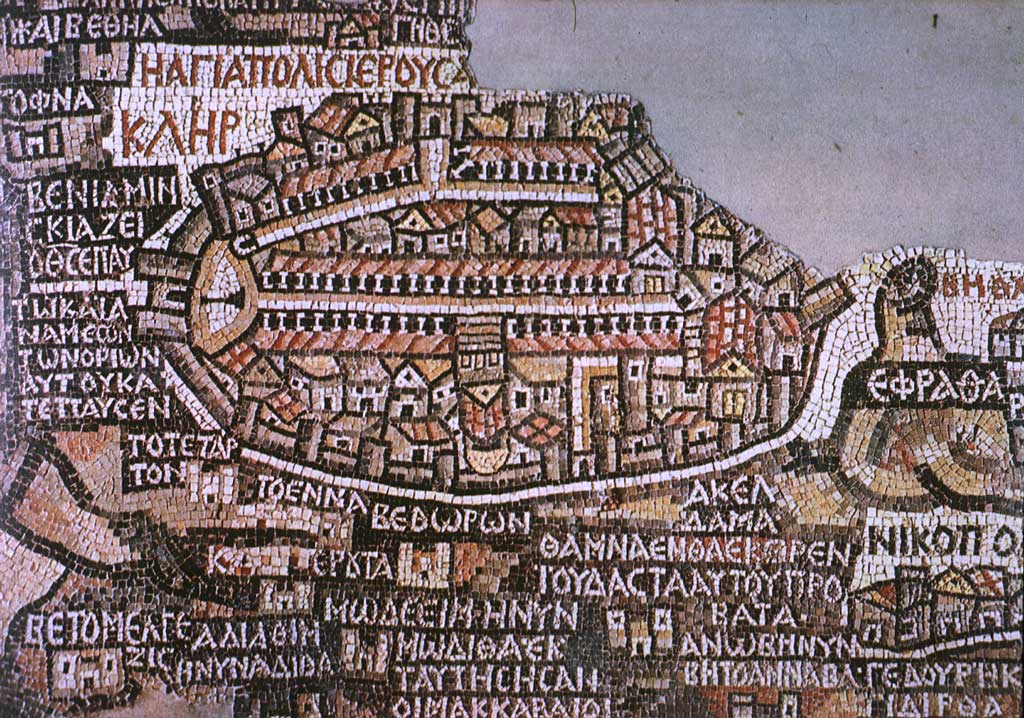
The Old Testament mentions this city five times, but many Christians have never heard of it. On our upcoming trip to the Holy Land we will visit it, and we promise that it will be unforgettable. The city is called Madaba (usually spelled Medeba in the Bible), and it’s in central Jordan about 20 miles south of Amman.
During the Middle Bronze Age (roughly 2000-1550 B.C.), which was the time of Abraham and the patriarchs in Genesis, Madaba was a major settlement and a Moabite border town. The Israelites destroyed it during the forty years of wilderness wandering before arriving in the Promised Land. When the tribal territories were allotted under Joshua, the area was part of Reuben’s inheritance. The Moabites took it back in the ninth century B.C.
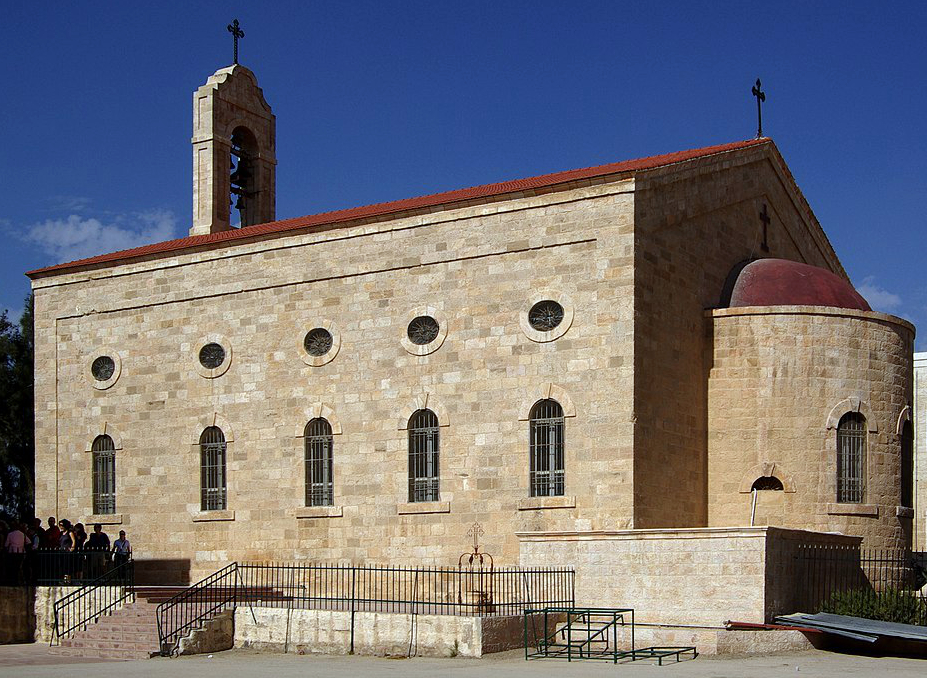
Madaba was an important Christian city during the Roman and Byzantine periods (which ended in A.D. 628), and it features some spectacular floor mosaics in its churches and monasteries. The oldest known map of the Holy Land and the oldest geographic floor mosaic in the world is the famous “Madaba map,” located in the Church of St. George. It originally contained more than two million mosaic tiles, called tesserae. The largest and most prominent feature is Jerusalem, which sits in the center of the map. Among the other places to visit in Madaba are Roman churches, a palace, and a Roman street that has been preserved.
To promote the post-pandemic recovery of tourism, the nonprofit organization CyArk has worked with the Madaba community to create 3D interactive models of some of the city’s main historical sites. You can view the Church of St. George, the Church of St. Mary, and the “Burnt Palace,” all of which house magnificent mosaics. During your virtual visit, you can take a guided tour of the sites and hear stories from Madaba’s locals. It’s all free.
Take a sneak peek at one of our Holy Land trip’s great destinations and learn a little about where we (and hopefully you with us!) are headed. You can find it here. Click on the “Guided Tour” and “Exhibit” tabs.
Images: Public domain, via Wikimedia Commons (map); Berthold Werner, CC BY 3.0, via Wikimedia Commons (church)